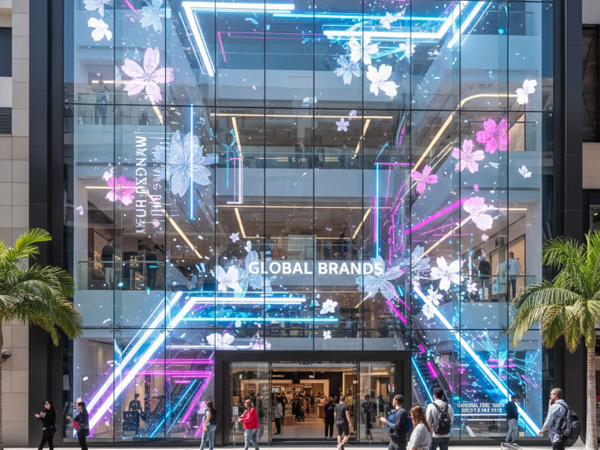
What parts does an LED display consist of
LED beads, modules, cabinets, sending card, receiving card, power supply, controller, screen protection components.
LED beads: These are light-emitting diodes (LEDs), available in three colors—red, yellow, and blue. The colors of the displayed image are shown by them.
Modules: Usually made from a PCB board as the base substrate, with driver ICs, LED array chips, circuit drivers, LED beads, power supply, protective layer, etc., installed on it.

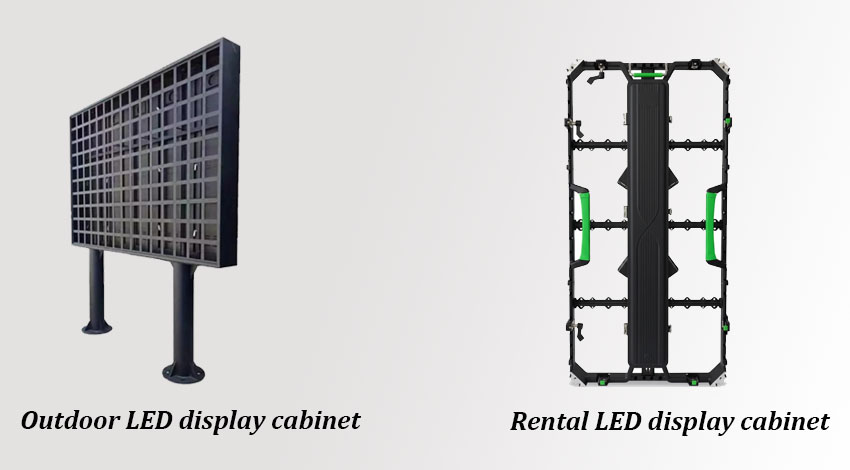
Cabinets: Multiple modules are installed inside cabinets to form a larger display screen.
Sending card: Connects external signals and sends them to the LED display.
Receiving card: Receives signals transmitted from outside and controls the turning on and off of the LED display’s beads to achieve the effect of displaying images.
Power supply: This is the easiest to understand—it is the power system for the entire LED display.
Controller: Controllers are divided into asynchronous controllers and synchronous controllers. Synchronous controllers can be used for real-time image signal transmission. Asynchronous controllers can be used for non-real-time transmission scenarios, such as unattended LED displays.
Screen protection components: Mainly used for dustproofing, waterproofing, heat insulation, lightning protection, etc. The main purpose is to extend the service life of the LED display.
In practical applications, for some simplified LED displays, we only need modules, power supply, receiving card, and sending card to complete image playback.
Share this Post:
Milestrong Blog& News